

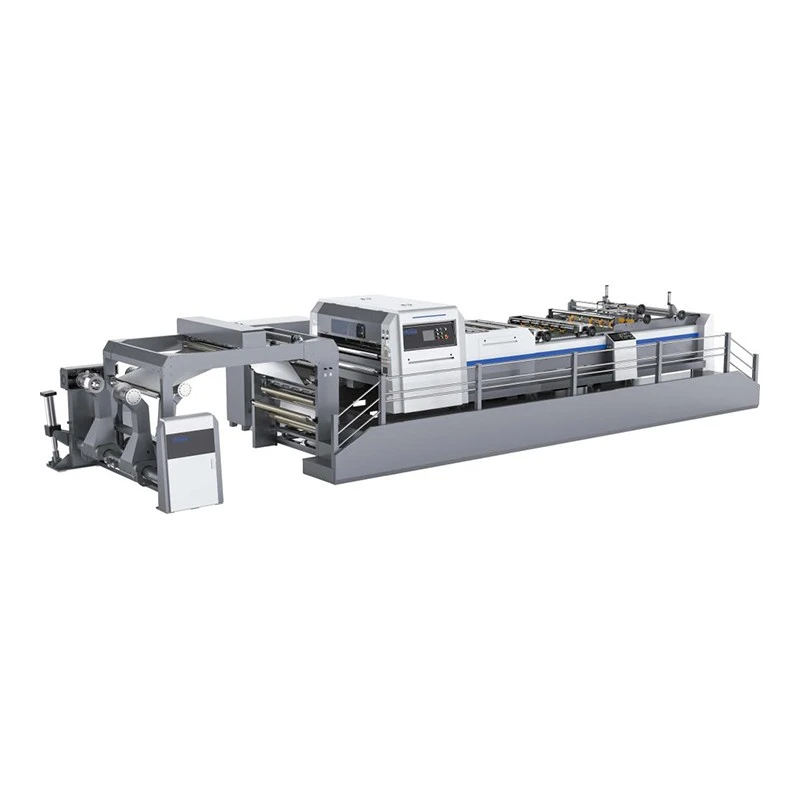
Product Overview
Duplex Labelstock Slitting Equipment converts wide labelstock master rolls into multiple finished rolls through controlled unwinding, web guiding, longitudinal slitting and duplex rewinding. The two-position rewind section supports continuous production where slit width, roll diameter, core size and winding condition are defined by the finished-roll specification.
The machine is configured around labelstock structure, parent-roll dimensions, material thickness, adhesive layer, release liner and required finished-roll format.
Material Compatibility
Processes face stock, adhesive and release liner structures. Tension and winding conditions are matched to the combined material construction.
Suitable for coated and uncoated paper label materials requiring controlled web feeding and consistent longitudinal slitting.
Processes compatible film-based label materials according to substrate thickness, adhesive construction and liner properties.
Slitting and Rewinding Process
Controlled Unwinding
The parent roll is fed through the machine under regulated web tension. The unwind section maintains stable material movement before longitudinal cutting.
Longitudinal Slitting
Knife positions are set according to the required finished widths. Cutting conditions are selected according to material thickness and layer construction.
Duplex Rewinding
The two-position rewind section collects slit rolls continuously. Rewind tension and contact pressure are adjusted during roll formation to suit the finished-roll specification.
Key Product Features
Multi-Layer Web Control
Labelstock combines face material, adhesive and liner layers. Controlled tension helps maintain stable web movement through the complete converting path.
Flexible Slit Layout
Knife positions can be arranged for multiple finished widths from one parent roll according to the production layout.
Controlled Roll Formation
Rewind settings are adjusted according to core size, material thickness and target roll diameter to maintain consistent roll geometry.
Duplex Output
Two rewind positions support continuous collection of slit rolls and provide a practical configuration for multi-roll production.
Technical Parameters
|
Parameter |
Reference Value |
|
Machine Type |
Duplex Slitter Rewinder |
|
Core Diameter |
76.2 mm / 3 in |
|
Slitting Method |
Longitudinal knife slitting |
|
Rewinding Method |
Duplex rewinding |
|
Minimum Slit Width |
20 mm |
|
Maximum Finished Roll Diameter |
600 mm |
|
Material Thickness |
30–250 μm |
|
Material Structure |
Paper, film, self-adhesive labelstock |
|
Tension |
Adjustable |
|
Roll Configuration |
Multiple slit rolls |
Application Areas
Label Printing
Produces narrow labelstock rolls for downstream roll-fed printing where stable web width and winding geometry are required.
Self-Adhesive Converting
Converts wide adhesive labelstock into production widths for subsequent printing, coating, die cutting and related roll-processing operations.
Industrial Labels
Suitable for roll-based label materials used in identification, logistics, packaging and industrial marking.
Selection Criteria
Material Construction
Confirm face-stock material, adhesive type, liner material and total thickness. These values determine the required web-control and slitting conditions.
Finished Roll Size
Specify finished width, roll diameter, core diameter, roll weight and winding direction. These dimensions define the rewind configuration.
Parent Roll
Provide parent-roll width, outside diameter and weight to establish the required unwind capacity and machine layout.
Production Target
Running speed should be evaluated together with material thickness, slit width, finished-roll diameter and production volume.
Roll Quality Control
Slit Edge
Knife position, cutting condition and web tension affect the consistency of the finished edge.
Roll Hardness
Rewind tension and pressure determine winding density. Settings are matched to the material structure and target roll condition.
Roll Alignment
Web guiding and controlled winding help maintain aligned edges during finished-roll build-up.
Downstream Compatibility
Consistent slit width and roll geometry support stable web feeding during subsequent printing.
Uniform finished rolls provide controlled web tracking during downstream label converting.
Core diameter, roll diameter and roll weight should match the handling, storage and processing requirements of the next operation.
Production Configuration
Machine configuration is based on actual production data rather than web width alone. Required information includes parent-roll width and diameter, material thickness, face-stock type, adhesive construction, liner type, target slit widths, finished-roll diameter, core size and required running speed.
Material samples and production specifications can be reviewed before final configuration to determine suitable knife arrangement, tension settings and rewind conditions.
FAQ
Q: What labelstock materials can be processed?
A: Compatible paper-based, film-based and self-adhesive labelstock can be processed when material thickness, adhesive construction and liner properties match the machine configuration.
Q: What information is required for machine selection?
A: Provide parent-roll width and diameter, material thickness, face-stock and liner construction, adhesive type, finished slit widths, rewind diameter, core size and target running speed.
Q: What core size is commonly used?
A: A 3 in / 76.2 mm core is a reference configuration for finished rolls. Other core dimensions can be specified according to the production requirement.
Q: What finished-roll diameter can be produced?
A: A maximum finished-roll diameter of 600 mm is a reference value. The applicable diameter depends on machine configuration, material thickness, core size and finished-roll requirements.
Q: How does duplex rewinding support production?
A: The two-position rewind arrangement allows multiple slit rolls to be collected through a continuous production cycle while maintaining controlled winding conditions.
Q: What should be confirmed before final configuration?
A: Confirm the material structure, parent-roll dimensions, finished slit widths, roll diameter, core size, roll weight and required production speed. These details establish the main machine configuration.
Hot Tags: duplex labelstock slitting equipment, China duplex labelstock slitting equipment manufacturers, factory


